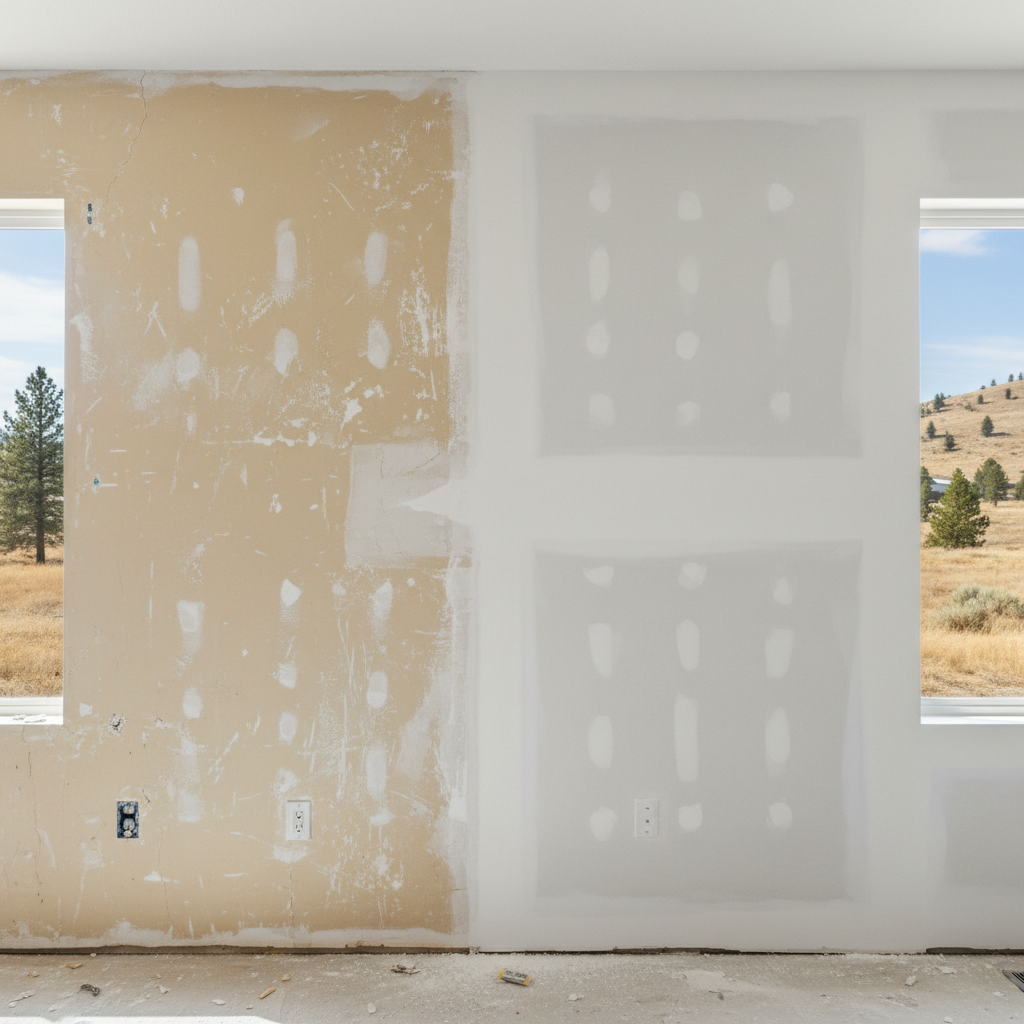
Alright, let's talk drywall texture. It's one of those decisions that seems small when you're building or renovating, but it makes a big difference in how your home feels and how much work it'll be down the line. You've got two main camps: smooth finish or some kind of texture. I've seen both done well and not-so-well all over Yakima, from the older homes in the Barge-Lincoln neighborhood to the newer builds out by West Valley. So, what's the deal?
Smooth Drywall: The Clean, Modern Look
A smooth drywall finish is exactly what it sounds like: perfectly flat, no bumps, no patterns. It's a clean, contemporary look that a lot of folks are going for these days. It really opens up a room and makes it feel airy.
Pros of Smooth Drywall:
- Modern Aesthetic: If you're into minimalist design or just want a crisp, clean backdrop for your decor, smooth is the way to go. It makes colors pop and shadows play nicely.
- Easier to Clean: There's nowhere for dust to hide. A quick wipe down, and you're good.
- Timeless: While textures can go in and out of style, a smooth wall is pretty much always in.
Cons of Smooth Drywall:
- Cost: This is usually the big one. Achieving a truly smooth, level five finish takes serious skill and more time. You're paying for the extra labor and the expertise. Any little imperfection – a tiny bump, a slight dip – it's going to show up like a sore thumb, especially with the bright, direct sunlight we get here in the Valley.
- Durability: Not that it's weak, but dings and dents are much more noticeable on a smooth surface. If you've got kids, pets, or just a lot of furniture moving, you might be patching more often.
- Repairs are Tricky: If you do need to patch a smooth wall, blending it perfectly so it disappears takes a lot of finessing.
Textured Drywall: Hiding Imperfections and Adding Character
Textured drywall, on the other hand, involves applying a pattern or design to the surface. Think orange peel, knockdown, or skip trowel. These aren't just for looks; they serve a practical purpose too.
Pros of Textured Drywall:
- Hides Imperfections: This is where texture really shines. Small dings, minor bumps, slight variations in the drywall installation – the texture helps camouflage them. It's a lifesaver if your walls aren't perfectly plumb or if you've got an older home.
- Cost-Effective: Generally, texturing is less expensive than a level five smooth finish. It still takes skill, but it's less labor-intensive to get a good result.
- Durability (Perceived): While the drywall itself isn't stronger, the texture makes minor scuffs and marks less obvious. You won't notice every little scratch.
- Adds Character: Depending on the texture, you can add a lot of visual interest and warmth to a room.
- Easier Repairs: Matching a texture for a patch is often simpler than trying to perfectly blend a smooth finish. We do a lot of texture matching at Yakima Drywall Company, and it's usually a pretty straightforward fix.
Cons of Textured Drywall:
- Can Collect Dust: Those nooks and crannies? They're great for dust and cobwebs. You might need to dust or vacuum your walls occasionally, especially with a heavier texture.
- Can Look Dated: Some textures, like popcorn ceilings, definitely have a timestamp. While wall textures are generally more subtle, it's something to consider.
- Harder to Clean: Wiping down a textured wall isn't as easy as a smooth one.
My Recommendation for Yakima Homeowners
Given our local conditions and what I've seen over the years, I generally lean towards a subtle texture for most homes in Yakima. Here's why:
First off, the cost. A really good smooth finish is an investment. If you're on a tighter budget, a light orange peel or knockdown will give you a great look without breaking the bank, and it'll still look fantastic.
Then there's the practical side. We live in an active community. Kids, pets, moving furniture – life happens. A textured wall is just more forgiving. Those little bumps and scrapes that would stand out on a smooth wall just blend in with a texture. Plus, with our dry climate, walls can sometimes show minor hairline cracks more readily, and texture helps hide those too.
Now, if you're building a custom home with a very specific modern aesthetic, and you're willing to invest in the top-tier finish and maintenance, then a smooth wall can be absolutely stunning. But for the average homeowner looking for a balance of aesthetics, durability, and cost, a light texture is often the smarter choice. It's a practical, good-looking solution that holds up well to everyday life.
Ultimately, it's your home, your call. But hopefully, this gives you a clearer picture of what you're getting into with each option. If you've got questions or want to see some samples, give us a shout at Yakima Drywall Company. We're always happy to talk shop.