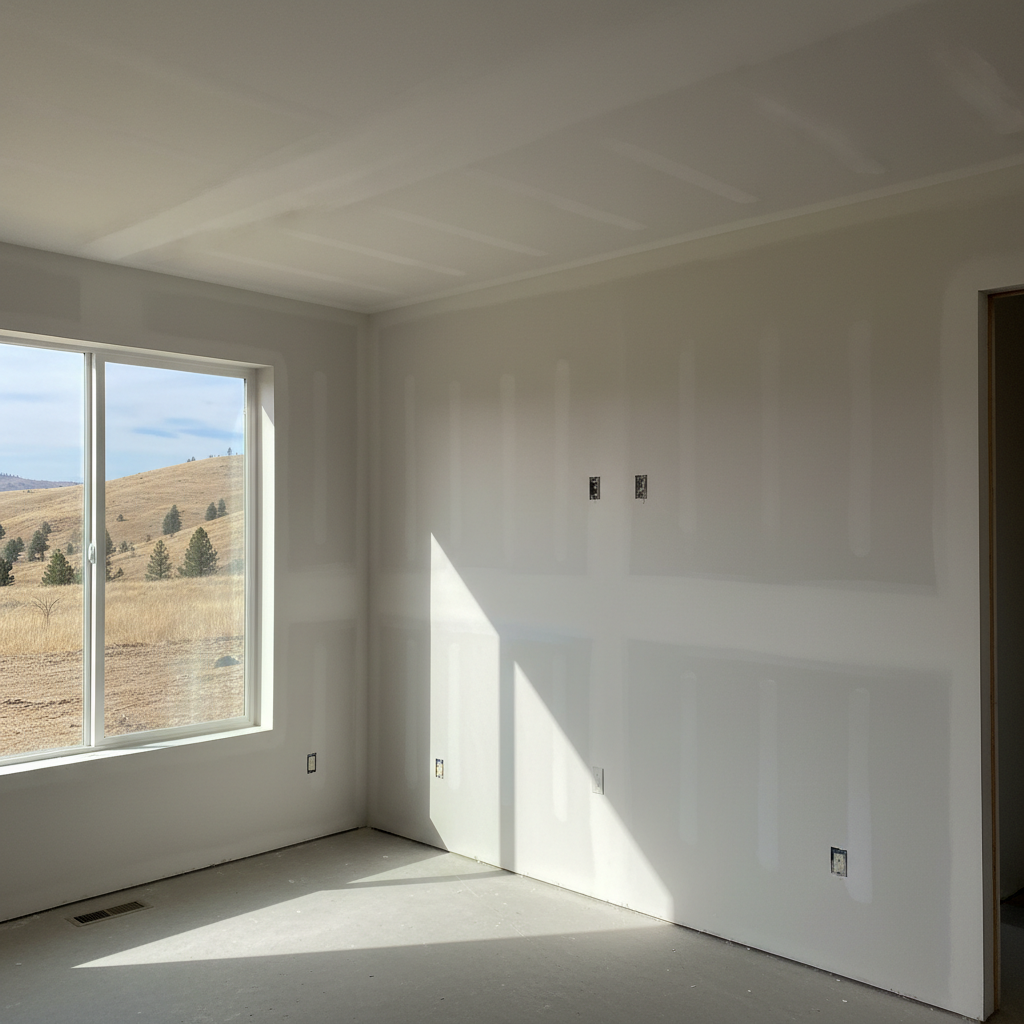
Ever wonder how to keep your drywall looking factory fresh long after it's installed? It's not just about getting it done right the first time – though that's a huge part of it, and something we pride ourselves on at Yakima Drywall Company. Once the mud's dry and the paint's on, your walls still need a little love to stay smooth and crack-free. Especially here in Yakima, with our crazy temperature swings and dry air, your drywall can take a beating if you're not paying attention.
Extending the Life of Your Drywall Finish
The best way to make your taping and mudding last is to be mindful of your home's environment. Think about it: drywall is essentially gypsum plaster pressed between paper. It's tough, but it's not invincible, especially when it comes to moisture and movement.
Control Humidity: This is a big one for us. Our summers are dry, and then we get those damp, cold winters. Constant fluctuations can make the paper joints expand and contract, leading to hairline cracks. Using a humidifier in the winter and ensuring good ventilation in bathrooms and kitchens year-round really helps. You don't want the air too dry, or too wet, for long periods.
Mind Your HVAC: If you've got vents blowing directly onto a wall joint, especially in a high-traffic area, that constant air movement and temperature change can stress the mud. Try to direct vents away from walls or adjust your airflow. It's a small thing, but it can make a difference over years.
Protect High-Traffic Areas: Corners, especially, take a beating. If you've got kids or pets, or just a narrow hallway, consider corner beads that are a bit more robust than standard paper tape. Metal or vinyl corner beads offer better impact resistance. It's an upgrade we often recommend for busy homes.
Regular Maintenance: What You Should Be Doing
Good news: drywall maintenance isn't some complicated chore. It's mostly about observation and quick action. You're not going to be mudding every weekend, I promise.
First, just take a walk around your house a couple of times a year. Look at your walls and ceilings. Pay extra attention to corners, around windows and doors, and where walls meet the ceiling. These are the stress points.
If you see a tiny nail pop or a hairline crack, don't ignore it. A little spackle or joint compound applied with a putty knife, sanded smooth, and then painted over, can prevent it from becoming a bigger issue. It's like patching a small hole in your tire before it goes flat. For minor dings or scuffs, a quick dab of paint is usually all you need.
Also, keep your walls clean. Dust and grime can build up, especially in textured finishes. A soft cloth and a mild cleaner (like a little dish soap in water) can do wonders. Just don't over-saturate the wall, especially if it's not painted with a durable, washable paint.
Warning Signs of Bigger Problems
While small cracks are often just cosmetic, some signs tell you something more serious might be going on. You need to know the difference.
Large, Jagged Cracks: A crack that's wider than a credit card, or one that runs diagonally across a wall or ceiling, can indicate structural movement. This isn't just a drywall issue; it could be a foundation problem, especially in older homes in areas like the West Valley where soil can shift.
Moisture Stains or Bubbling Paint: Any discoloration, soft spots, or paint that's bubbling or peeling is a red flag for water intrusion. This could be a leaky pipe, a roof issue, or even condensation behind the wall. You need to find the source of the water and fix it ASAP, otherwise, you're looking at potential mold and much bigger drywall repairs.
Multiple Nail Pops: A single nail pop here or there isn't usually a big deal. But if you suddenly see a bunch of them appearing, especially in a new area, it might mean the framing behind the drywall is settling or moving more than it should. This is more common in new construction as the house dries out and settles.
Sagging Ceilings: This is a serious one. If your ceiling is visibly bowing or sagging, especially in the middle of a room, it could mean water damage, or even worse, structural failure. Get this checked out immediately.
When to Call a Professional
Look, I'm all for DIY. But there are times when you need to bring in the pros. If you're seeing any of those bigger warning signs I just mentioned – the large cracks, water damage, or sagging ceilings – don't try to just spackle over it. You're probably just hiding a symptom of a larger problem.
Also, if you're tackling a repair that's larger than a small patch, or if you're not confident in getting that perfectly smooth finish, that's when you call us. Drywall finishing is an art, and getting it seamless takes practice and the right tools. You don't want a lumpy, visible patch on your wall. We've got the experience to blend repairs seamlessly, making it look like nothing ever happened. It saves you frustration and often, more work down the line. We're here to help when you need that expert touch.
```